
New to this? Start here
A primer on the three types of barcode: the traditional 1D linear code, the 2D data matrix, and the QR code powered by GS1 Digital Link — and why the new one changes things.
GS1 Sunrise 2027
You know the barcode is changing. This guide explains what GS1 Sunrise 2027 and Tesco's Project Sunrise actually mean on your production line, and how to tell if you're ready.
Takes 2 minutes · 10 questions · instant result
The change
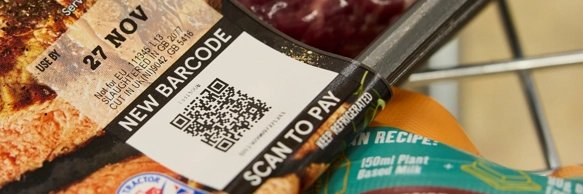
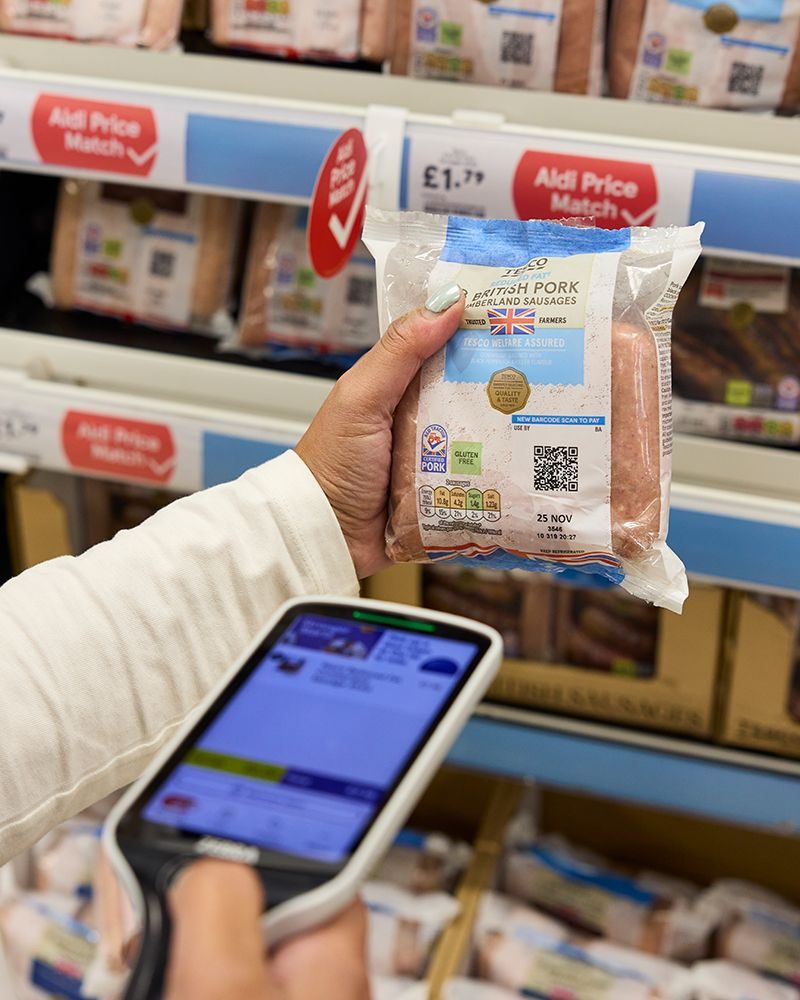
The barcode is being upgraded. Led by GS1's global Sunrise 2027 initiative, retailers are moving from the traditional linear barcode to 2D barcodes: QR codes powered by GS1 Digital Link, which can be read at the checkout as well as by shoppers. Tesco is among the first UK retailers trialling them on selected own-brand lines.
Unlike today's barcode, a single GS1 Digital Link QR code can carry much more. It holds the GTIN, plus data like batch number and use-by date, and links the physical pack to online content. Tesco's early trials focus on capturing use-by dates and batch numbers at the till, which helps reduce food waste and prevents expired products being sold.
The wider goal, Sunrise 2027, is the industry ambition for retailers to be able to scan these 2D barcodes at point of sale by the end of 2027. It's currently trials and clear industry direction rather than a blanket mandate, but the direction of travel is set, and suppliers who prepare early will be in a far stronger position.
The case for change
For retailers and shoppers, 2D barcodes unlock far more product information at the checkout and beyond. The benefits driving adoption are clear.
Up to a 40% reduction, as achieved by Woolworths in Australia using GS1-powered 2D barcodes.
Checkouts can read the use-by date held in the code and stop out-of-date products being sold.
Confirm product authenticity and surface ingredient and origin detail, building consumer trust.
Supports first-in-first-out, improves availability and reduces waste further.
There is a commercial case for suppliers too. Being ready protects your listings when a retailer moves, and the same data and verification that satisfy the code also cut rework, reduce the cost of a mislabelling incident and shorten a recall investigation.
These are the reasons the industry is moving. The harder question, and where most suppliers need clarity, is how to produce these codes correctly on a live production line. That's what the rest of this guide covers.
Not sure where you stand?
Take the two-minute readiness check and get your result straight away.
Already in production
Tesco trials under way
GS1 Digital Link QR codes on selected own-brand lines today.
Certified by GS1 UK
OAL Connected is certified to create, print, verify and manage GS1 Digital Link QR codes.
Printed and graded inline
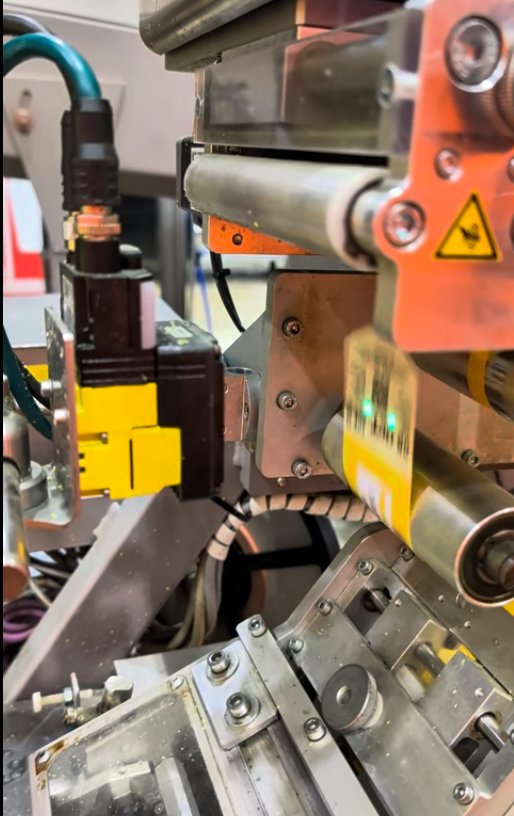
Every QR code is printed at line speed and graded by camera, pack by pack, in working UK factories.
The reality on the line
The most common assumption is that this is an artwork change: new code on the pack, job done. In practice it reaches into your data, your printing, your verification and your line systems, and that's usually where projects stall.
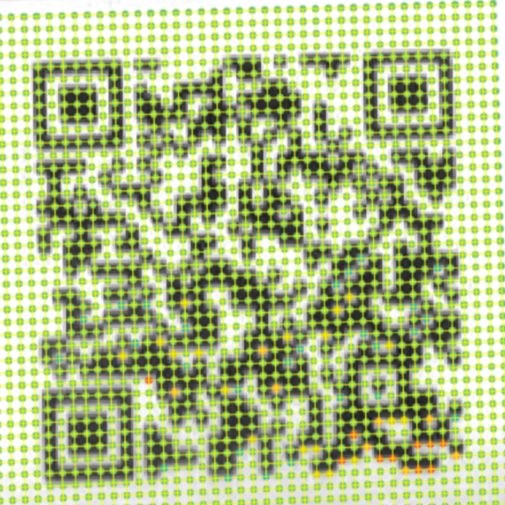
A GS1 Digital Link QR code can look perfect and still be wrong. If the underlying structure isn't built correctly, it may not scan reliably or work with retailers' systems down the line.
Tesco's guidance for fresh products sets a minimum grade of B. A QR code holds far more data than a linear barcode, so contrast, substrate, print resolution and placement all affect whether it grades and scans.
Printing the code isn't the finish line. You need to confirm the right code, carrying the right data, printed to the right quality, on every pack, with a record to prove it.
Codes depend on printers, cameras, line software and product data working together. The technology is rarely the hard part; keeping accurate data flowing across all of it is.
When a code fails or an audit comes knocking, you need a defensible record of what was printed, when, and how the quality was checked.
In the projects OAL sees, one of these five is usually the part that was not planned for. The quickest way to see where you stand is a short readiness check.
Two-minute check
Before you plan a pilot, it helps to know where you stand today. This quick check takes about two minutes and covers the areas that trip suppliers up most. You'll get an instant picture of where you're in good shape and where the gaps are.
Start the readiness checkThe supplier guide
This page gives you the overview. The full guide goes deeper: a practical, plain-English walkthrough written for the people who actually have to make this work — technical, packaging, quality and operations teams. It's built to be passed around internally, the document you send to the team before a project kicks off.
Request the guideWatch and learn
Sometimes it's easier to watch than to read. In these videos, OAL's Jake Norman sits down with Roshni Shah from GS1 UK to translate the standards into what actually happens on a production line.
A primer on the three types of barcode: the traditional 1D linear code, the 2D data matrix, and the QR code powered by GS1 Digital Link — and why the new one changes things.
A practical walkthrough of the journey from “we've been asked to do this” to printing verified codes on your line.
A closer look at what a GS1 Digital Link QR code actually looks like and what it carries.
There are eight shorter films too, each answering one question in under a minute. Browse the full video library →
Short on time?
Data, code, print, check. Each step has to work on a live line, at line speed, on every pack.
Keep control of your product data, so the right data goes into every code.
Build the code to the GS1 Digital Link standard: the Tesco URL, then GTIN, batch number and expiry date, each in the correct format.
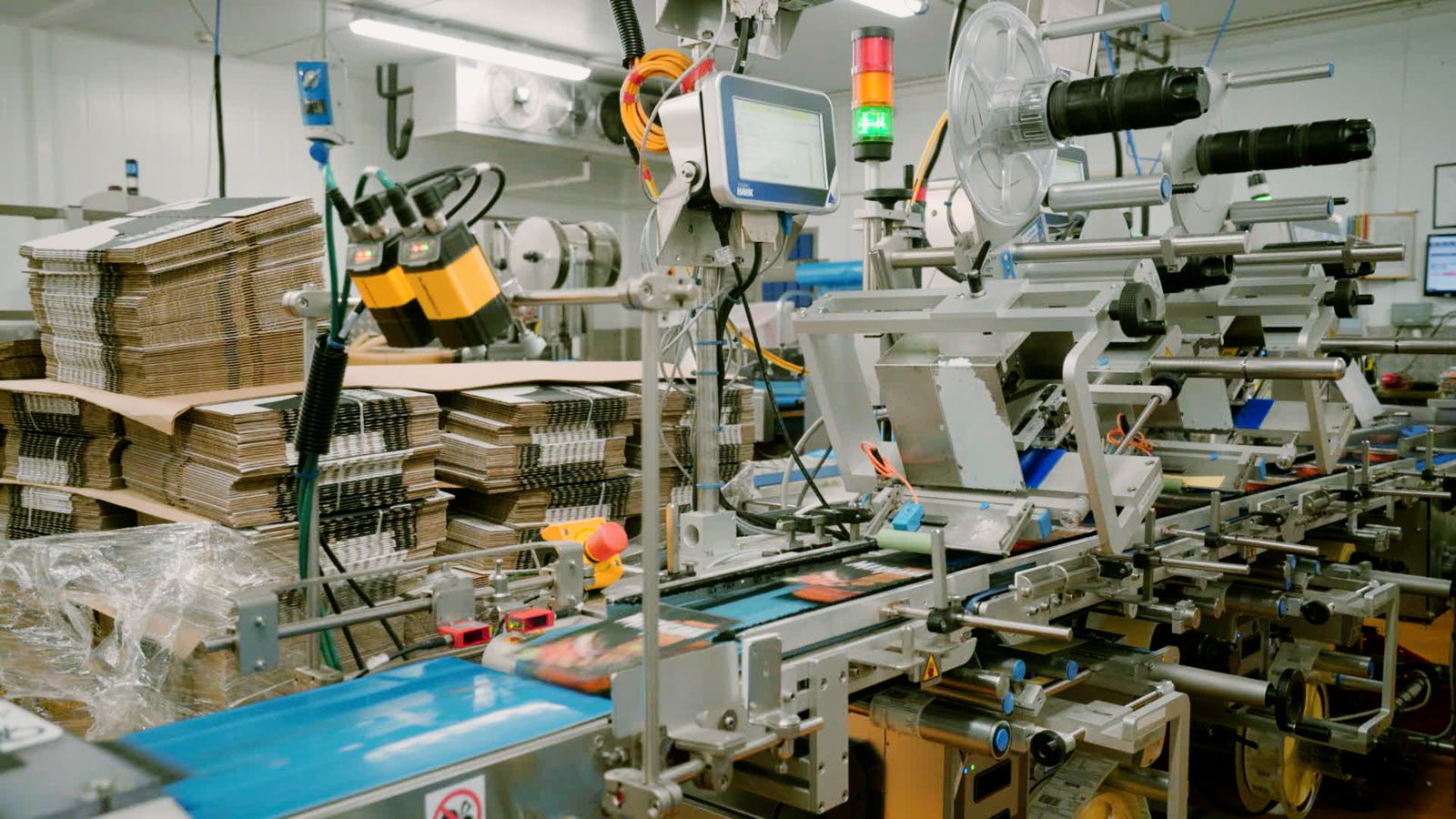
Print it inline as the date code is applied. Your substrate, printer type and line speed all shape what's possible, and it usually needs white space adding to the artwork.
Check every pack for the right data and good enough print quality to beep at the till, with a record kept for audit.
A good first move: print some samples early and get them checked. Most suppliers need more than one attempt, and finding that out now is easier than finding it out at rollout.
Send us your samples →Not sure where you stand?
Take the two-minute readiness check and get your result straight away.
Working with OAL
OAL helps food manufacturers make this work on real production lines, from a first check of whether your line can handle it, through to verifying live codes and keeping the evidence for audit.
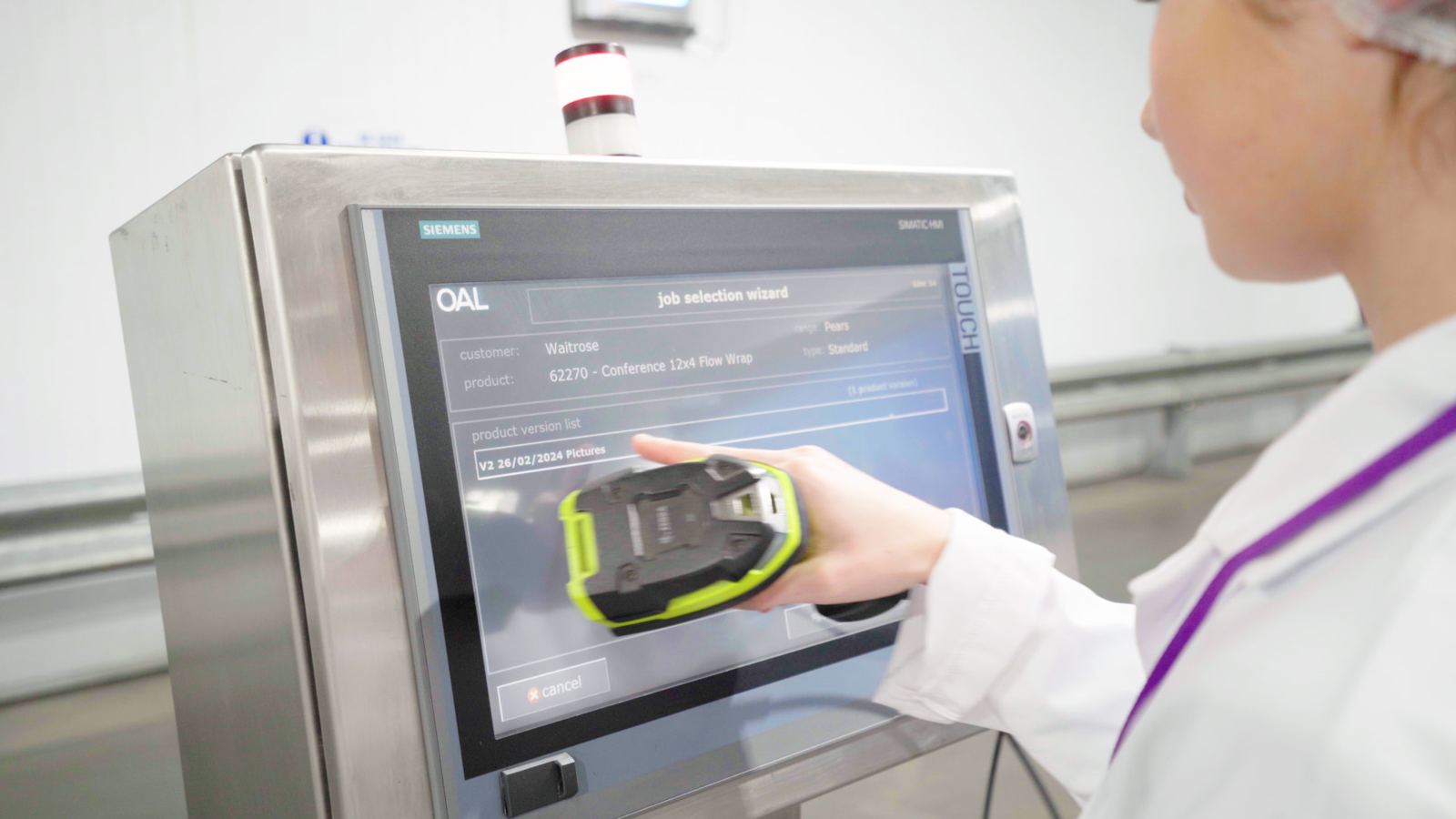
We look at your line, printers and software and tell you honestly what can print and verify QR codes as-is, and what would need to change.
Print a few codes and send them over. We confirm the GS1 Digital Link structure is right and grade the print against the ISO standard. We also go beyond the grade, using camera-based inspection to check how the code is likely to perform at a real till, because a code that passes the grade can still fail the scan.
Practical help joining up your data, printing and verification so the right code, with the right data, prints on every pack.
In-line checks on every pack, with a full digital record you can stand behind in a BRC or retailer audit.
Works with your existing printers
OAL Connected integrates with all the leading coding and marking brands, so you are not tied to one printer vendor and your current kit is the starting point, not the problem.





OAL Connected is certified by GS1 UK to create, print, verify and manage GS1 Digital Link QR codes, so this isn't theory. It's already running in factories.
Send us your samples or book a line assessment →See how OAL's solution worksOAL's Autocoding System combines intelligent software and robust hardware to automate printer setup, packaging verification, label verification and barcode verification across every production line. By eliminating date code and labelling errors before they cause problems, manufacturers improve food traceability, reduce waste and support retailer Code of Practice compliance.
Proof
“Without a doubt I would recommend OAL to other manufacturers […] this system is the failsafe.”
“I've been very impressed with the OAL system, it's really been a game-changer for us. What was originally brought in to prevent product recalls has now become an invaluable tool to improve our production efficiency.”
Food and drink manufacturers running OAL systems on live production lines.
Round-the-clock support and service, because production does not stop at five.
OAL works alongside M&S, McDonald's, Tesco and the HSE on quality and compliance standards.
How close is your line?
Take the two-minute readiness check and get your result straight away.
Common questions
Where to begin
You don't need it all figured out to make a start. Wherever you are, still scoping it out or already printing test codes, the suppliers who move early find the transition much smoother.
Prefer to talk it through? Call us on +44 1733 394700 or email hello@oalgroup.com. We're happy to point you in the right direction, no pressure.
Talk to us
Ask our team anything about QR codes powered by GS1 — or request the supplier guide and we'll send it over.
A1, Southgate Way, Orton Southgate, Peterborough PE2 6YN, United Kingdom